

Quick answer
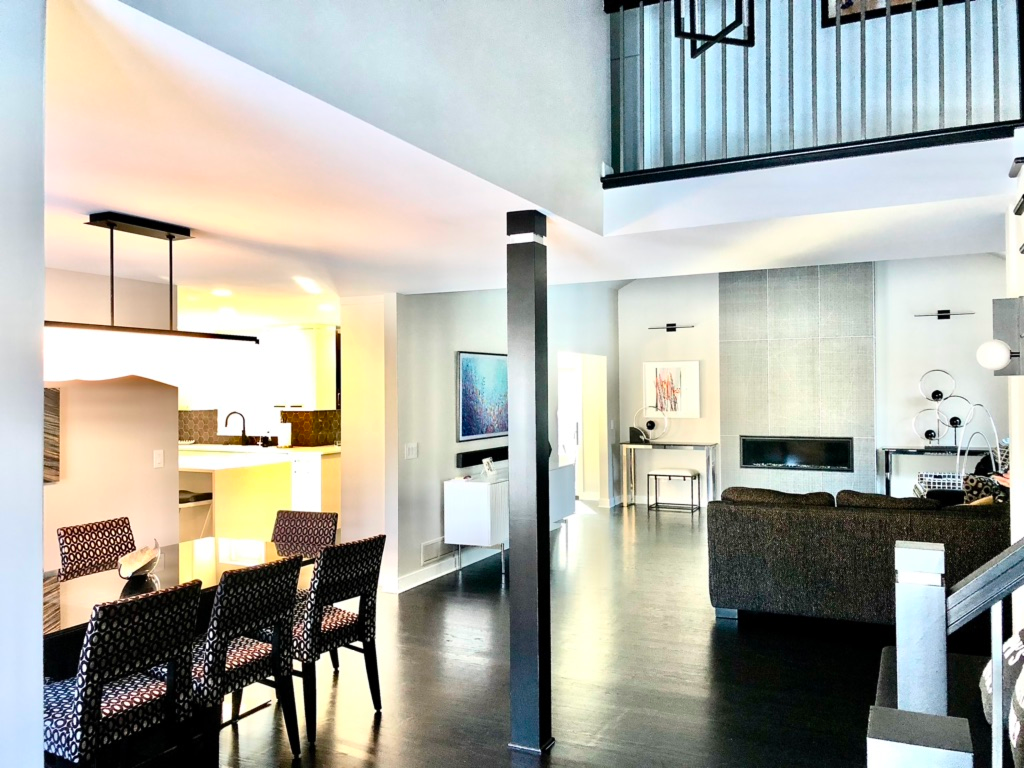
A whole-house remodel in the Twin Cities typically costs $60 to $150 per square foot for a full gut-and-rebuild, versus $15 to $60 per square foot for a lighter cosmetic refresh. For a design-build project that reworks the main living levels of a 2,500 to 3,500 square-foot Edina, Minnetonka, or Minneapolis home, that usually means $400,000 to $800,000. Comprehensive remodels that touch nearly every room and bring mechanical systems current generally run $800,000 to $1.5 million, and projects that add structure, square footage, or full systems replacement can exceed $1.5 million.
Published averages for Minneapolis "house renovations" sit far lower, around $25,000 to $93,000, but those figures mostly describe selective updates to a few rooms. The most important thing to understand about whole-house pricing is that scope and the condition of your existing systems drive cost more than square footage does.
Why whole-house remodel prices vary so widely
Two Twin Cities homes with identical footprints can land hundreds of thousands of dollars apart. That is not a pricing quirk; it reflects three variables that a room-by-room quote never has to confront.
1. How much of the layout changes
Refinishing every room within the existing walls is one project. Removing bearing walls, relocating a staircase, or opening a closed 1950s floor plan into a connected kitchen and living space is a different project with engineering, structural steel, and new load paths. Layout change is the single biggest step up between cost tiers.
2. What is behind the walls
Once a house is opened up, wiring, plumbing, ductwork, insulation, and framing are all exposed, and the responsible choice is to correct them while access is easy. Much of Minneapolis and St. Paul housing predates 1950, so knob-and-tube wiring, galvanized supply lines, undersized electrical service, and uninsulated wall cavities are common discoveries. A whole-house budget should assume some of this is present.
3. Finish level, multiplied across every room
In a single-room remodel, upgrading to custom cabinetry or natural stone moves the budget by a few thousand dollars. In a whole-house remodel, that same decision repeats in the kitchen, every bathroom, the mudroom, the built-ins, and the flooring that ties them together. Finish selections do not set your tier, but they can move you a long way within it. Our earlier post on the most expensive parts of a whole-home remodel breaks down where those dollars concentrate.
Whole-house remodel cost tiers in the Twin Cities
These are planning ranges to help you place your project in the right category before design begins, not bids.
- Selective refresh ($150,000 to $400,000): New finishes, paint, flooring, lighting, and one or two updated rooms within the existing layout. Technically a "whole-house" project, but you are choosing rooms rather than remodeling the home.
- Focused whole-house remodel ($400,000 to $800,000): Kitchen, primary suite, and key bathrooms reworked; finishes unified throughout; targeted electrical and plumbing updates. Layout improves while the footprint mostly holds.
- Comprehensive whole-house remodel ($800,000 to $1.5 million): Full layout rework, all bathrooms, mechanical and electrical brought to current code, insulation and windows addressed, and continuous finish quality in every room.
- Extensive remodel with additions ($1.5 million and up): Structural reconfiguration, a second-story or rear addition, full systems replacement, and top-tier finishes. The home is effectively rebuilt around its best bones.
If a home addition is part of your plan, remember that new square footage carries its own foundation, roofing, and exterior costs on top of the remodel. Our guide to calculating home addition costs covers that math separately.
What the 2026 material market means for your budget
Material pricing has moved gradually higher through 2025 and 2026. Industry reports in early 2026 put framing lumber 12 to 18 percent above the same period in 2025, and tariffs on imported steel, aluminum, and copper have raised the cost of everything from electrical components to window frames and plumbing fixtures. Imported ceramic tile, lighting, appliances, and cabinet hardware have also seen increases. In a mid-2026 Farnsworth Group survey, about 45 percent of homeowners said project cost was a challenge, up from 33 percent a year earlier.
For a whole-house project, the practical takeaway is to lock in selections and pricing early in the design phase, and to carry a real contingency, typically 10 to 15 percent of construction cost for older homes, rather than treating the first estimate as a ceiling.
Twin Cities specifics: permits, code, and older housing stock
Permits are priced on project value
Minneapolis, St. Paul, Edina, and Minnetonka all issue building permits with fees based on the total valuation of the work, including labor and materials, plus a plan review fee and a Minnesota state surcharge. Separate electrical, plumbing, and mechanical permits are typically required as well. As a reference point, a $15,000 bathroom remodel in Minneapolis carries roughly $950 in combined permit fees under the city's 2026 schedule; whole-house projects scale accordingly and usually land at a low single-digit percentage of construction cost. Your design-build contractor should pull permits on your behalf and schedule inspections at framing, rough-in, insulation, and final stages.
Code items that commonly add cost in whole-house projects
- Electrical service upgrades. Many pre-1970 homes in Minneapolis and St. Paul have 60 or 100 amp service; a modern kitchen, EV charger, and heat pump usually require 200 amps.
- Egress and bedroom requirements. If a basement bedroom is part of the plan, Minnesota code requires a compliant egress window or door.
- Energy code. Once walls are open, insulation and air sealing must meet current Minnesota energy code, which is a benefit in our climate but a line item nonetheless.
- Smoke and CO detection. Significant remodeling typically triggers requirements to bring smoke and carbon monoxide alarms up to current code, which your contractor will confirm with the local building official.
Neighborhood context
Edina and Minnetonka projects often involve 1950s to 1980s ramblers and split-levels with sound structure but dated layouts, where opening the main level is the primary goal. Minneapolis neighborhoods like Linden Hills, Fulton, and Kenwood, and St. Paul areas like Mac-Groveland and Highland Park, feature pre-war homes where character is worth preserving but systems almost always need attention. Planning for the era of your home, not just its floor plan, keeps surprises manageable.
Is a whole-house remodel worth it compared to moving?
In the Twin Cities, selling and buying carries commissions, closing costs, moving expenses, and, in the current market, a likely jump in mortgage rate. For homeowners who like their lot and neighborhood, the comparison often favors remodeling, but it should be decided on numbers. We walk through that calculation in Should You Remodel or Move? The 2026 Math for Twin Cities Homeowners.
On resale return, the 2025 Cost vs. Value data for the Minneapolis area shows midrange major kitchen remodels recouping roughly 75 to 85 percent and midrange bathroom remodels around 60 to 70 percent. A whole-house project will not recoup 100 percent at sale, and it should not be evaluated that way. Its value is a home that works for the next 15 to 20 years, plus a stronger resale position than a patchwork of dated rooms.
How to keep a whole-house budget on track
- Remodel as one project, not in phases. Spreading work over several phases typically costs 10 to 20 percent more in total because mobilization, dust protection, and tie-in work repeat each time, and finished areas must be protected from later construction.
- Choose design-build. When the designer and builder are one team, pricing is tied to the plan from day one, and there is a single point of accountability for both scope and cost.
- Settle structure and systems first. Decide on wall removals, electrical service, HVAC, and plumbing before selecting finishes. Those decisions set your tier; finishes fill it in.
- Carry contingency in writing. A whole-house budget without contingency is a plan to be surprised, especially in a pre-1950 home.
- Plan your living arrangements. For comprehensive projects, moving out for the duration is usually better for the family and the schedule, and that cost belongs in the budget too.
Frequently asked questions
How much does a whole-house remodel cost per square foot in Minnesota?
Plan on $15 to $60 per square foot for a cosmetic refresh and $60 to $150 per square foot for a full gut remodel. High-end design-build projects with structural changes and premium finishes can exceed that upper range.
How long does a whole-house remodel take in the Twin Cities?
Design and selections typically take two to four months, and construction on a focused whole-house remodel usually runs four to eight months. Comprehensive projects with additions can take a year or more, and outdoor work such as foundations and roofing is best scheduled around Minnesota's winter.
Do I need a permit for a whole-house remodel in Minneapolis or St. Paul?
Yes. Any structural, electrical, plumbing, or mechanical work requires permits, with fees based on project valuation. A licensed Minnesota residential building contractor should pull the permits and coordinate inspections.
Can I live in my home during a whole-house remodel?
Sometimes, for focused-scope projects with a clear phasing plan. For comprehensive remodels that take the kitchen and all bathrooms offline at once, most families find moving out is less stressful and helps the project finish faster.
Plan your whole-house remodel with Executive Remodeling
Executive Remodeling is a design-build firm serving the Twin Cities metro, including Edina, Minneapolis, Minnetonka, and St. Paul. Our owners visit every job site, and our process ties realistic pricing to your design from the first meeting so you know which tier your project belongs in before construction starts. If you are weighing a whole-house remodel in 2026, contact us to schedule a consultation and get a clear, locally grounded budget for your home.
.avif)